
Korean War Fighter Discovery Project
202407.25
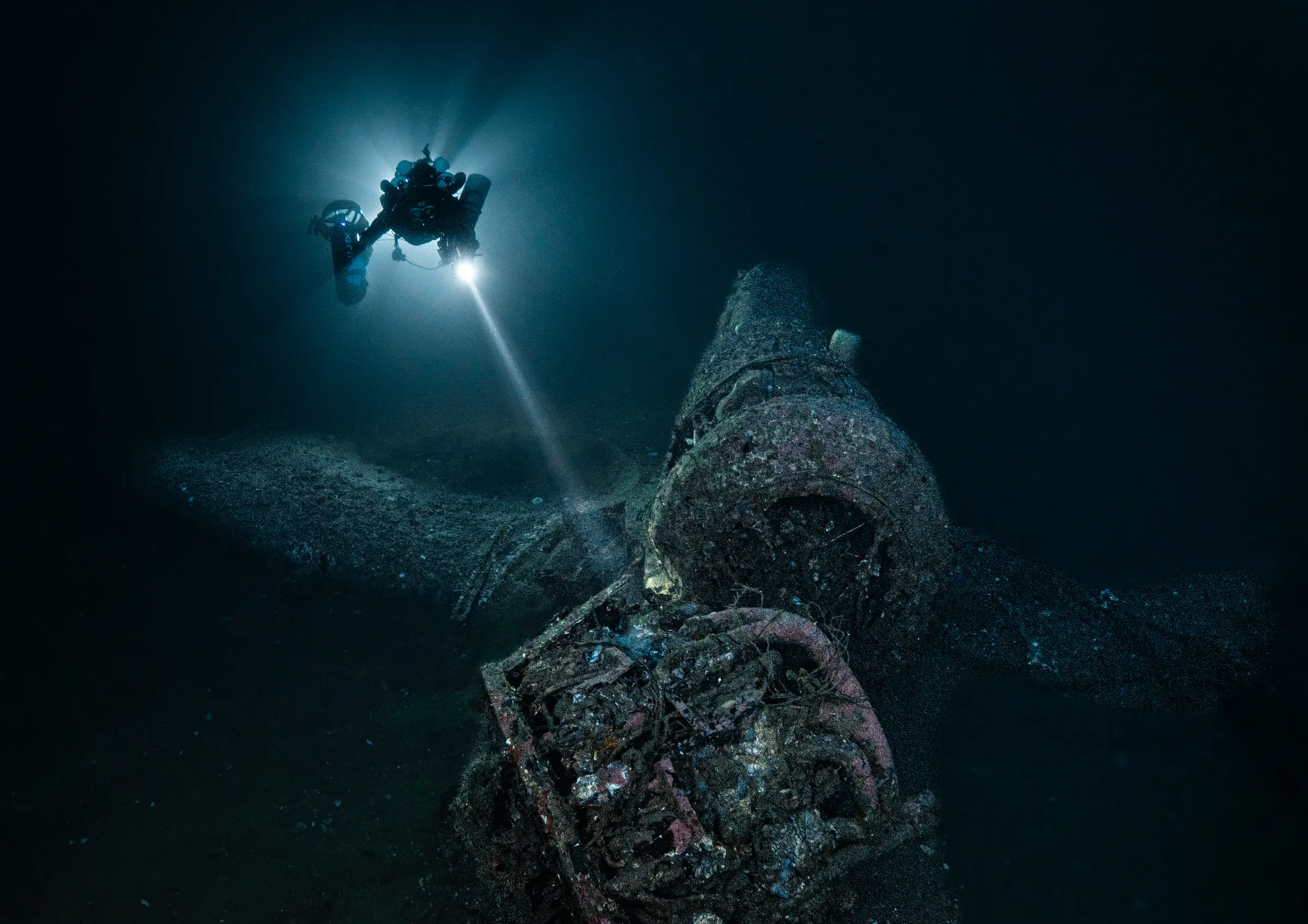
Through the heat of summer 2025, the team carried out a significant underwater survey project. It traces back to July 25, 2024, when GUE Instructor Evaluator Kyungsoo Kim, diving during a training course off Yangyang, Gangwon Province, came across an object on the bottom that looked like an aircraft.
What began as a possible aircraft sighting became a full survey project over the dives that followed, as the team located the propeller and the fuselage and documented the airframe’s shape and dimensions, the engine and the propeller.
The aim goes beyond finding a wreck: to explore, survey and document the remaining airframe in situ, and to preserve it digitally through photogrammetry.
Explore
Locate and verify the fuselage, the propeller and the surrounding debris field.
Survey
Measure wingspan, propeller diameter and the fuselage-to-propeller distance.
Record
Document the wreck’s present condition in video and stills.
Preserve
Build a photogrammetric 3D model as a lasting digital record.
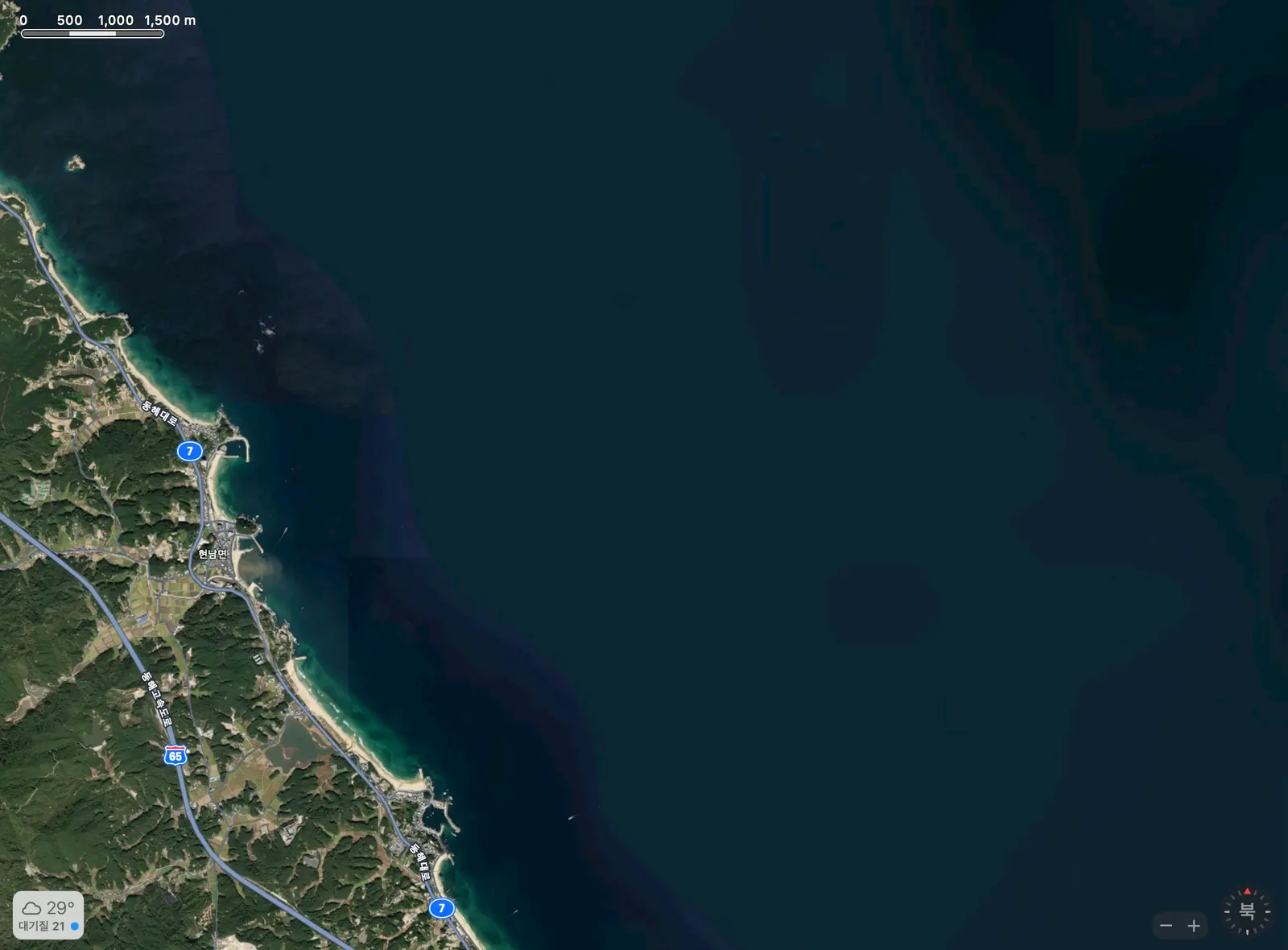
Off Yangyang,
51 m down
Great depth, cold bottom water and visibility that changes from day to day. With a site this hard to reach, progress was slow. Even so, many technical divers volunteered their time to search, survey and document the wreck together.
- Depth
- 51–52m
- Bottom temp.
- ≈2–7℃
- Visibility
- ≈3–15m
From first contact
to a 3D record
Since the first sighting in July 2024, the project has run for two years . From relocating the wreck to survey work, ghost-gear removal and photogrammetry capture, these are the survey dive logs.
2YEARS2024.07 — 2026.10
F4U Corsair
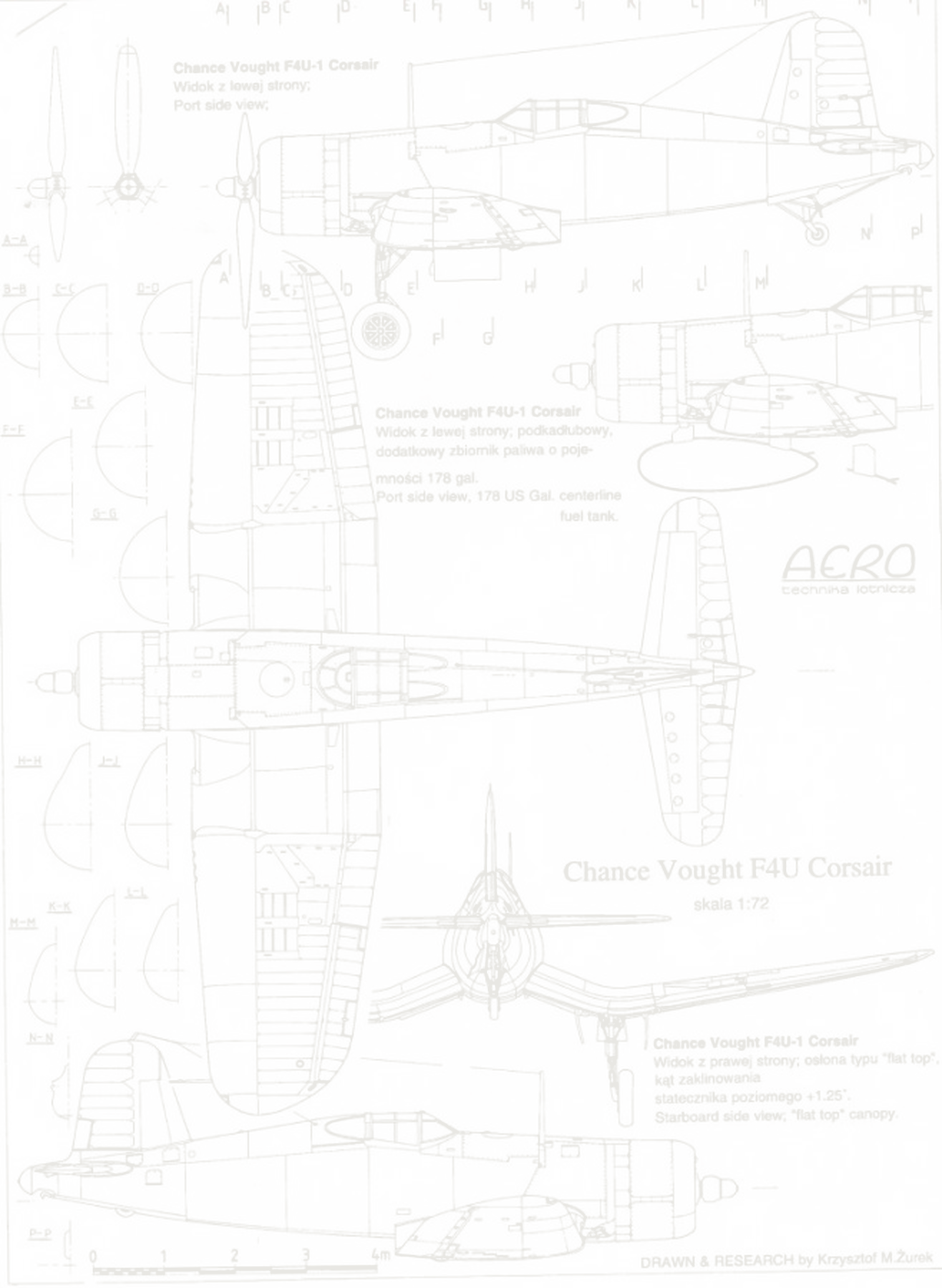
Based on a comparison of the wing shape, the engine type and form, and the size and shape of the propeller confirmed so far, the team believes the aircraft is very likely a Chance Vought F4U Corsair.
The Corsair’s distinctive inverted gull wing, large air-cooled radial engine and four-blade propeller match the features identified on the wreck.
Inverted gull wing
Wings bend down from the root, then rise toward the tips
Large air-cooled radial engine
Cylinders arranged radially around the crankcase
Four-blade propeller
Diameter measured on site: about 3.7 m
February 21, 1952 · F4U Corsair from USS Essex
Citing U.S. Pacific Fleet records, CNN reported a candidate: a Corsair launched that day from the aircraft carrier USS Essex. While escorting a battle-damaged AD-4 Skyraider, it went down in the sea in a snowstorm. The pilot’s remains were never recovered, and the pilot was listed as killed in the line of duty. Based on the divers’ photos, the DPAA team leader also judged that the wreck shows the features of a Corsair.[1]
At this stage the type is recorded as provisional, not confirmed. Further measurements and historical and technical research will be needed to confirm the type and establish how the aircraft was lost.
Archive · USS Essex, January 1952
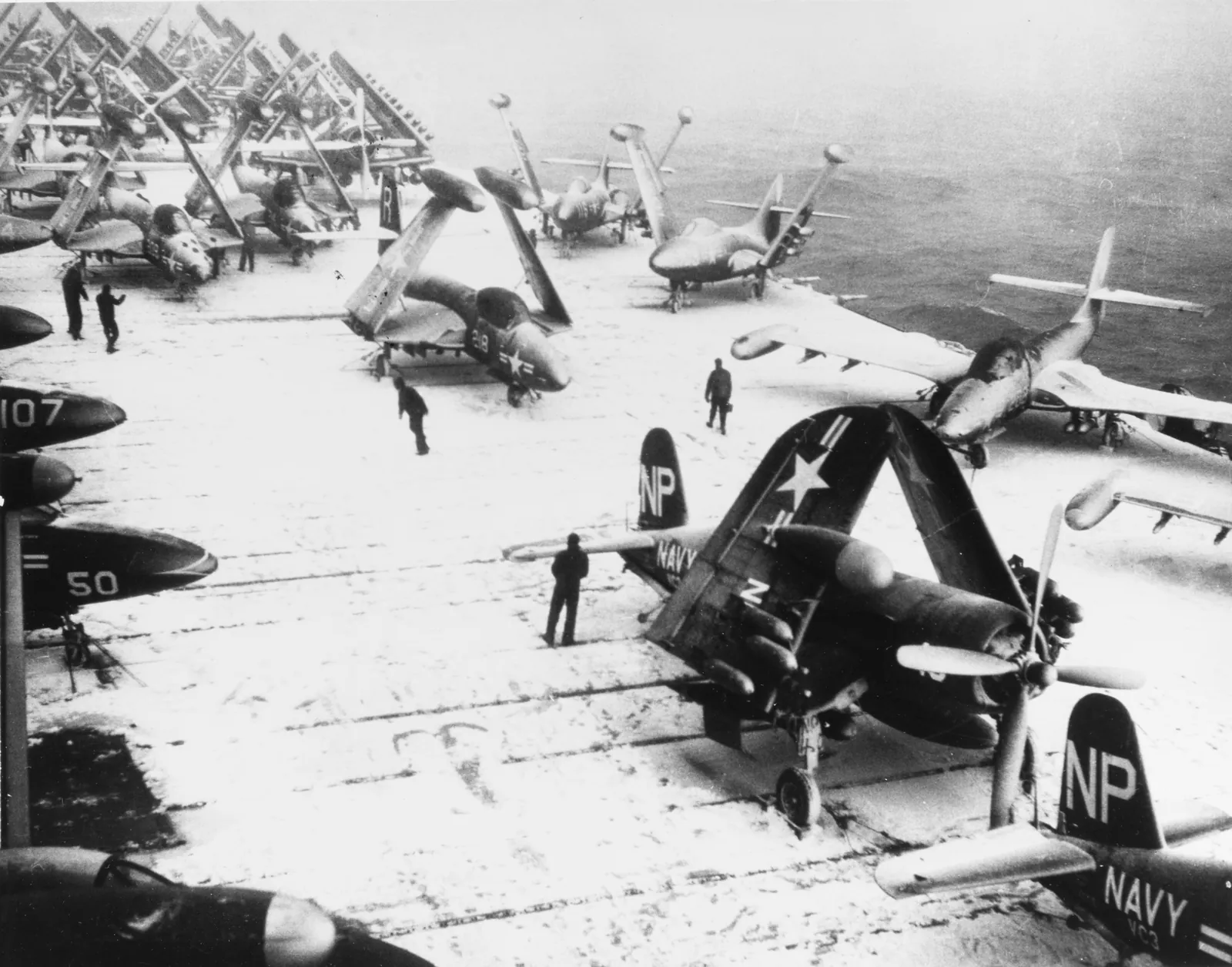
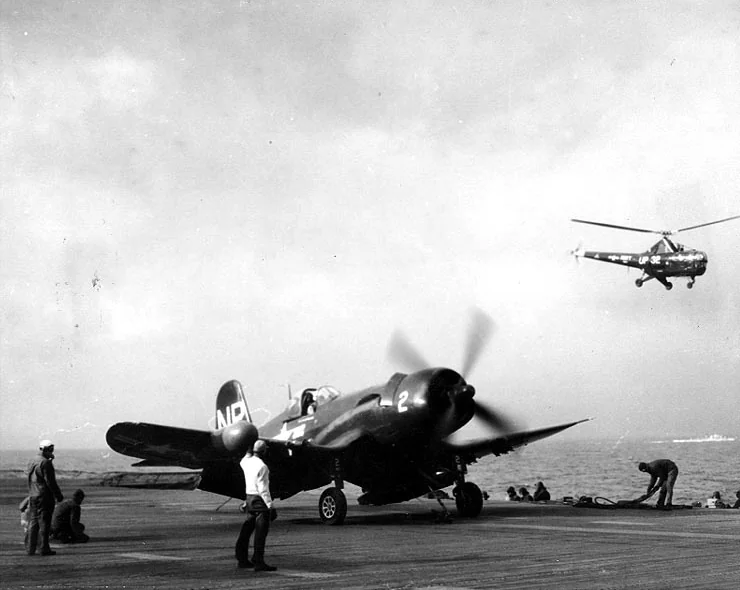
Official U.S. Navy photographs taken aboard the same carrier a month before the loss. Whether any aircraft shown is the wreck found off Yangyang has not been established.
Turning the wreck
into data
The fuselage and propeller were filmed over multiple dives and reconstructed into photogrammetric 3D models. Key dimensions measured on the models are listed alongside.
- Wingspan (tip to tip)≈9 m
- Left wing, remaining section≈4.5 m
- Windscreen, lower front edge50 cm
- Fuselage depth51.5 m
- Propeller diameter≈3.7 m
- Blades4
- Propeller depth50.8 m
Work carried out
in consultation with DPAA
Since the discovery, the exploration has been carried out in communication and consultation with DPAA.
Defense POW/MIA Accounting Agency
An agency of the U.S. Department of Defense
It accounts for U.S. service members missing from World War II, the Korean War, the Vietnam War and other conflicts and, where needed, carries out field investigations, the recovery of remains and identification.
- 01
Contact and consultation with DPAA
In connection with the wreckage and location confirmed during the exploration, the team contacted DPAA directly and met with its officials. All subsequent work was carried out in consultation with DPAA.
- 02
Documentation continued
The team continued to dive, survey, film and build the 3D photogrammetry models, compiling a record of the aircraft.
- 03
August 2026 · DPAA field survey
DPAA visited the Yangyang site with its South Korean counterpart, the agency that recovers and identifies the remains of fallen service members. Two underwater drones scanned the seabed for about five hours and confirmed an aircraft on the bottom. Based on its shape and engine section, the DPAA team leader said the wreck could be the aircraft they are looking for.[1]
- 04
Next steps for DPAA
DPAA expects to return to the waters off Yangyang in the near future. Any remains recovered would go through identification at its laboratory in Hawaii, and families are notified only once an identification is confirmed.[1]
2026
10.08—10
From October 8 to 10, 2026, the team extended the search to a 60 m radius around the aircraft, looking for the tail section and further wreckage, and for any trace of the pilot who has yet to come home. This was an independent effort by volunteer divers, separate from any official investigation by DPAA or other agencies.
Time until the search starts (KST)
Find the tail section
Locate the tail section, which has not yet been found.
Search for wreckage and the pilot’s remains
Cover every part of the bottom within 60 m for further wreckage and any trace of the pilot’s remains.
The 60 m around the aircraft, divided into four sectors,
searched repeatedly by eight divers in four teams
Laying the lines
Lines are run 60 m out from the aircraft to the north, east, south and west, defining the search area.
Each line carries a knot every 3 m and, every 6 m, a tag marked with bearing and distance, so divers always know where they are.
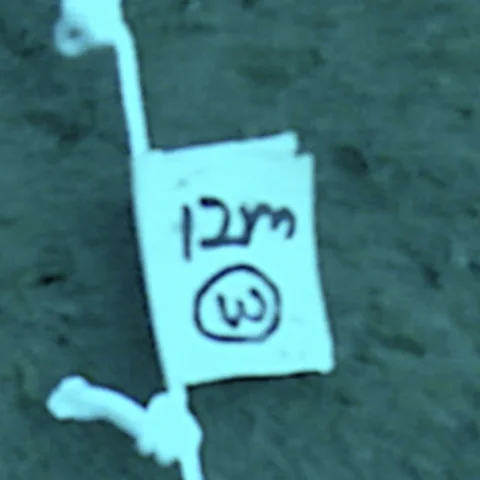
Four-team sweep
Each of four teams takes the sector between two neighbouring lines and swims back and forth between them, tag to tag.
W0 → S0 → S6 → W6 → W12 → S12 → …
With every crossing the team moves 6 m farther out, covering the whole sector without gaps.
Recovering the lines
Once the search is complete, every line is recovered so that nothing is left behind in the environment.
51 m down,
in the light
Photos and video from the extended search will be added here as they are processed.

A piece of history
beneath the sea
A fighter that once flew has lain beneath the East Sea for decades.
This project is not just about finding old aircraft wreckage. It is the work of exploring, surveying, recording and preserving in 3D what remains underwater.
To some, it may be nothing more than old debris on the seafloor.
To us, it is a precious trace that keeps a moment of the Korean War in memory.
Through this project, we hope to record the aircraft that has rested so long beneath the sea, and to uncover the history it carries.
Our thanks to everyone who explored and documented with us over this long journey.
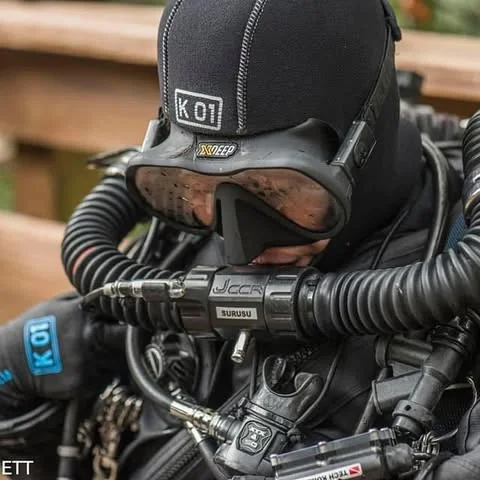
The divers who went down
From the first sighting through relocation, survey, ghost-gear removal, photogrammetry and the extended search: the divers behind the project.
